Learning to Kitesurf in One Week – Is It Really Possible?
One of the most common questions our beginner kiters ask before joining a kite safari is: “After my course, how much does it cost to rent kite equipment?” Another one is: “What happens once my lessons are over?”
The answer isn’t as straightforward as many people expect. In this article, I’d like to explain what really happens during a typical week on board with us, what our lesson plan includes, and, most importantly, what you should realistically expect if you’re not yet an independent kiter and you come on board with us.
Our kite lesson plan is simple. Included in the price of every kite safari are 9 hours of private lessons or 12 hours of semi-private lessons (you can read more about our lesson packages here).
These lessons are available to anyone who is not yet able to kitesurf independently, whether you’re starting from zero or you’ve already begun riding (badly) and you are not ready to go alone. As long as you’re not an independent kiter – if you become independent before using all of your allocated hours, congratulations! At that point you no longer need lessons and can continue riding on your own. In this case, you will simply need to rent equipment for the rest of the week.
However, this isn’t what usually happens. Most of our students finish their included lesson hours feeling that they’ve learned a lot, but they still don’t feel confident enough to ride completely on their own. That’s perfectly normal.
For this reason, many beginners decide to continue with additional lessons. Extra private lessons are always available during the safari for 30€ per hour, allowing you to keep progressing during the week.
WHAT DOES IT REALLY MEAN TO BE AN INDEPENDENT KITER?
Many people assume that completing a beginner course automatically means they are ready to kitesurf alone. In reality, becoming an independent kiter takes more than simply riding a board for a few metres.
Independent kiters should be able to set up their kite gear, launch safely, ride, return to the beach, land the kite safely, and deal with unexpected situations if something goes wrong. It sounds simple, but all of these skills need time and practice.
WHAT CAN DELAY YOUR PROGRESSION?
Three main factors can slow down your learning (according to me).
Wind conditions. Fortunately, this is rarely an issue during a kite safari in the Red Sea, but every now and then we may have a lighter wind day, making progression more difficult.
Injuries or physical discomfort. Even a small injury, such as a sore foot or tired muscles, may force you to skip a lesson and reduce your practice time. Don’t forget that doing more than 3h lessons a day it’s not realistic. You get tired and you stop progressing even if you are in the water with your instructor. You are basically wasting time.
You. Kitesurfing can be frustrating at times. Don’t give up, and try to give us always your 100%.
WHAT CAN YOU REALISTICALLY ACHIEVE IN ONE WEEK?
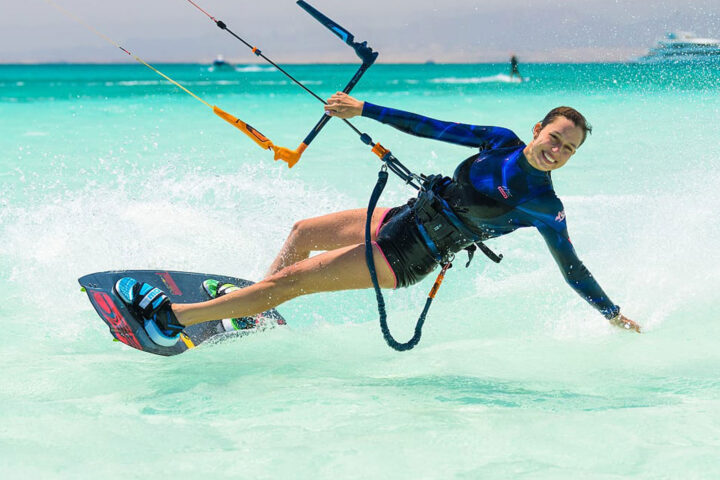
If you’re starting from scratch, a realistic goal after one week is to develop good kite control, understand the fundamentals of kitesurfing, and begin riding on the board. Some students will already be riding (badly) in both directions, while others may still be working on their water starts.
If you already have some experience on the board when you come on our yacht, your will usually be good with your waterstarts after one week, riding consistently in both directions and learning to stay upwind. Becoming an independent kiter in this case is a very achievable goal.
LET’S DO A METAPHOR
Learning to kitesurf is like building a wall. You need strong foundations before adding the next layer. Some people build that wall faster than others, but as long as you keep going, your wall will always progress, will be higher and stronger. This is what we do on our kite safari with our lessons – we help you continue building this wall or we start building this wall with you.